

Introduction
The DogeOS blockchain represents a new direction for Dogecoin inspired ecosystems. Rather than focusing on speculation or meme driven narratives, DogeOS is emerging as a new execution environment designed for developers building applications on Dogecoin, with DogeOS RPC infrastructure playing a central role in how applications interact with the network reliably.
As Web3 infrastructure matures, developers increasingly care less about hype and more about execution guarantees, predictable performance, and reliable access to blockchain data. DogeOS enters this landscape with a clear objective: provide a programmable operating system layer that enables real applications to run efficiently while maintaining cultural and technical ties to Dogecoin.
For developers, this shift changes priorities, with DogeOS RPC infrastructure becoming just as important as execution logic or smart contract design. RPC reliability, latency consistency, and infrastructure design matter more than token launches or short term incentives. This article explores what DogeOS blockchain is, why developers are paying attention, how it compares to other execution environments, and why production grade RPC infrastructure is essential when building on DogeOS.
What Is DogeOS Blockchain?
The DogeOS blockchain is a developer focused execution layer designed to bring programmable smart contract capabilities to the Dogecoin ecosystem. While Dogecoin itself was never designed for complex application logic, DogeOS fills that gap by providing a modern environment for building decentralized applications while retaining Dogecoin alignment.
DogeOS blockchain introduces:
A programmable execution layer suitable for dApps
Developer tooling designed for real application deployment
A structured environment for experimentation and testing
A testnet focused approach before mainnet scale
Rather than attempting to replace existing Layer 1 blockchains, DogeOS focuses on expanding what is possible within the Dogecoin universe by offering an operating system style abstraction for developers.
The DogeOS blockchain is especially relevant for teams that want:
Cultural alignment with Dogecoin
A cleaner execution environment than legacy chains
Early access to a growing developer ecosystem
Infrastructure that can scale gradually with usage
Why Developers Are Paying Attention to DogeOS Blockchain?
The DogeOS blockchain stands out not because of raw throughput claims, but because of its positioning.
Many modern chains optimize for either speculative DeFi or high throughput consumer apps. DogeOS instead emphasizes developer experience and infrastructure clarity. For builders, this translates into fewer unknowns and more predictable behavior.
Key reasons developers are exploring DogeOS blockchain include:
Lower conceptual overhead compared to complex Layer 2 stacks
Clear separation between execution logic and infrastructure
A testnet first mindset that encourages safe iteration
Alignment with Dogecoin without inheriting its technical limits
For early stage developers and infrastructure teams, DogeOS blockchain offers a relatively clean slate where best practices can be applied without legacy constraints.
How DogeOS Blockchain Compares to Other Execution Environments?
DogeOS vs Ethereum
Ethereum remains the most mature smart contract platform, but it comes with complexity, unpredictable fees, and infrastructure fragmentation.
DogeOS blockchain differs by focusing on simplicity and controlled growth rather than global decentralization at all costs. For developers who do not need Ethereum scale but want predictable execution, DogeOS can be attractive.
DogeOS vs Layer 2 Rollups
Layer 2 solutions introduce complexity through bridges, fraud proofs, and settlement dependencies. DogeOS avoids these by operating as a standalone execution environment tied to Dogecoin culture rather than Ethereum settlement.
This makes DogeOS easier to reason about operationally, especially for smaller teams.
DogeOS vs Experimental Chains
Unlike short lived experimental chains, DogeOS is positioning itself as a long term platform. The focus on developer tooling and infrastructure maturity signals intent beyond temporary experimentation.
Building on DogeOS: Developer Experience and RPC Infrastructure
From a developer perspective, DogeOS RPC infrastructure defines how transactions are submitted, state is queried, and applications remain responsive under real user traffic.
Building on DogeOS blockchain is designed to feel familiar while remaining lightweight.
Typical developer workflows include:
Deploying smart contracts on DogeOS testnet
Querying balances and contract state
Integrating DogeOS into backend services
Monitoring execution through RPC calls
The DogeOS developer documentation provides structured onboarding for these workflows, making it accessible even for teams new to the ecosystem.
External reference: https://docs.dogeos.com/en/home
Why RPC Infrastructure Is Critical on DogeOS Blockchain?
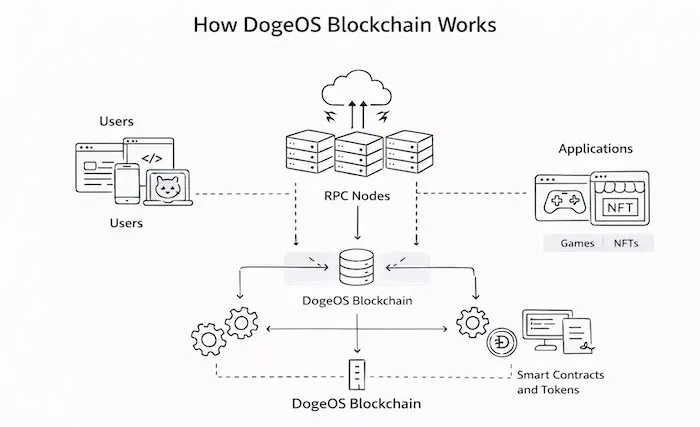
Every interaction with the DogeOS blockchain relies on RPC endpoints. Smart contract calls, state queries, transaction submission, and monitoring all flow through RPC infrastructure. This is why investing early in robust DogeOS RPC infrastructure is essential for teams that plan to move beyond experimentation.
On emerging chains like DogeOS, RPC infrastructure reliability is especially important because:
Public endpoints may change during early network phases
Rate limits can disrupt testing workflows
Latency inconsistencies affect debugging accuracy
Infrastructure instability slows developer adoption
For DogeOS blockchain builders, using stable RPC infrastructure is not an optimization. It is a requirement. For production applications, DogeOS rpc infrastructure is not just a connectivity layer, but the backbone that determines latency, reliability, and user experience.
Using dRPC for DogeOS Blockchain RPC Access
To support developers building on DogeOS blockchain, dRPC provides dedicated DogeOS RPC endpoints designed for testnet and early production workloads.
Developers can access DogeOS RPC via the dRPC chainlist:
https://drpc.org/chainlist/dogeos-testnet-rpc
Why dRPC Fits DogeOS Blockchain Well
dRPC aligns with DogeOS blockchain values in several ways:
Infrastructure designed for real workloads
Stable routing across distributed providers
Consistent latency across regions
Clear upgrade paths from testing to production
Instead of relying on a single public RPC endpoint, dRPC distributes traffic across multiple providers, improving reliability and reducing the risk of outages during active development phases.
NodeCloud vs NodeCore for DogeOS Blockchain Projects
When building on DogeOS blockchain, choosing the right infrastructure model matters.
When NodeCloud Makes Sense
NodeCloud is ideal for teams whose requests originate from many locations such as browsers, wallets, or global users.
Use NodeCloud when:
Frontend traffic comes from user devices
You need global low latency access
You want minimal operational overhead
You accept managed infrastructure tradeoffs
NodeCloud product page:
https://drpc.org/nodecloud-multichain-rpc-management
Using professionally managed DogeOS RPC infrastructure helps developers avoid rate limits, inconsistent responses, and downtime common with public endpoints.
When NodeCore Makes Sense
NodeCore is best suited for backend heavy systems where traffic originates from a small number of controlled regions.
Use NodeCore when:
All requests come from backend servers
Infrastructure is centralized in one or two regions
You require maximum control over RPC behavior
You can manage node operations internally
The choice between NodeCloud and NodeCore is not about company size. It is about traffic patterns and infrastructure design.
Use Cases Emerging on DogeOS Blockchain
Early DogeOS blockchain builders are exploring practical use cases, including:
Community driven applications tied to Dogecoin culture
Lightweight financial tools and dashboards
NFT and token experimentation
Onchain utilities rather than speculation
As the ecosystem matures, DogeOS blockchain is likely to attract applications that value predictability and cultural alignment over aggressive scaling narratives.
Internal Resources for Developers
Developers interested in how emerging chains approach infrastructure can also explore the Shibarium Chain Spotlight article:
https://drpc.org/blog/shibarium-rpc-infrastructure/
This provides additional context on how execution focused chains differ from traditional Layer 1 networks.
DogeOS Blockchain and the Future of Developer Focused Chains
The DogeOS blockchain reflects a broader trend in Web3: execution focused chains designed around developer needs rather than token economics.
As infrastructure standards rise, developers will increasingly choose chains based on:
RPC reliability
Predictable execution
Clear infrastructure models
Long term ecosystem intent
DogeOS blockchain positions itself well within this shift by prioritizing clarity over complexity. As DogeOS adoption grows, developers who treat DogeOS RPC infrastructure as first-class infrastructure gain a clear advantage in stability, performance, and operational confidence.
Take-Away
The DogeOS blockchain is not trying to compete with every major Layer 1. Instead, it offers a focused execution environment designed for developers who want to build real applications connected to the Dogecoin ecosystem.
For builders, the key takeaway is simple. Infrastructure matters more than hype. Reliable RPC access, predictable execution, and clear tooling are what enable real applications to ship.
With dRPC providing dedicated DogeOS RPC endpoints and flexible infrastructure options through NodeCloud, developers can build on DogeOS blockchain with confidence as the ecosystem evolves.
FAQs
What is DogeOS blockchain?
DogeOS blockchain is a programmable execution environment designed to bring smart contract capabilities and developer tooling to the Dogecoin ecosystem.
Is DogeOS blockchain production ready?
DogeOS is currently focused on testnet and early stage development. It is designed to mature gradually with developer adoption.
How do developers access DogeOS blockchain RPC endpoints?
Developers can use dedicated DogeOS RPC endpoints via dRPC at https://drpc.org/chainlist/dogeos-testnet-rpc.
When should I use NodeCloud for DogeOS blockchain?
NodeCloud is best when your application serves users globally and RPC requests originate from browsers or distributed clients.
Can DogeOS blockchain scale to production workloads?
Yes. With proper RPC infrastructure and controlled rollout, DogeOS blockchain is designed to scale alongside application demand.