A wallet address can hold many tokens.
A token address represents one specific asset.
Why You Need an ETH Token Address
Understanding and using the correct token address is critical in multiple scenarios.
Secure Token Transfers
Sending tokens requires:
A wrong token address means the transaction will fail or interact with the wrong asset.
Wallet Token Visibility
Wallets like MetaMask or Rainbow rely on token addresses to:
Smart Contract Interactions
dApps, DeFi protocols, and bridges reference token addresses to:
Approve spending
Execute swaps
Lock collateral
RPC & Indexing Queries
Token addresses are required to:
This is where reliable Ethereum RPC endpoints become essential.
Ways to Find ETH Token Addresses
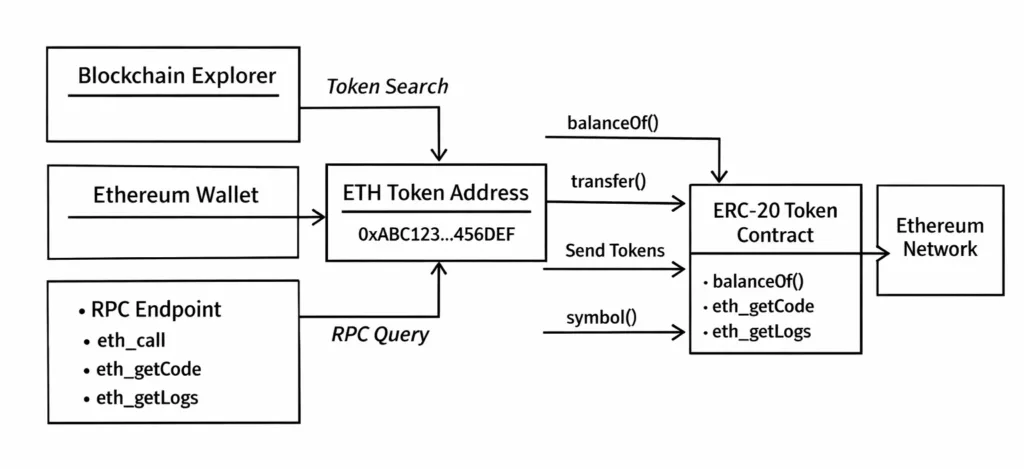
1. Using Ethereum Block Explorers (Etherscan)
The most authoritative source is Etherscan.
Step-by-step:
Visit https://etherscan.io
Search for the token name or symbol
Open the token page
Copy the Contract Address
Verify:
Always copy addresses from the token page, not random websites.
2. Via Wallet Apps (MetaMask, Rainbow, Ledger)
Most wallets expose token addresses directly.
In MetaMask:
Open token → “Token Details”
View contract address
Copy and verify on Etherscan
Hardware wallets (Ledger, Trezor) follow the same logic but rely on connected interfaces.
3. Using dRPC Ethereum RPC Endpoints
For developers, token discovery and balance checks are often done programmatically.
Using dRPC Ethereum RPC endpoints, you can query token contracts directly without relying on explorers.
Example: ERC-20 balance query (eth_call)
This approach is:
Query Ethereum token balances using dRPC RPC endpoints
4. Third-Party Tools & Developer Docs
Trusted sources include:
External reference: https://ethereum.org/en/developers/docs/erc20/
Best Practices for Handling ETH Token Addresses
Always verify on Etherscan
Never trust token addresses from DMs
Check network (mainnet vs testnet)
Store frequently used addresses in config files
Use checksummed addresses when possible
For dApps, hard-coding addresses without verification is a common source of bugs and exploits.
Common Issues and How to Solve Them
Token Not Appearing in Wallet
Cause
Token not added manually
Wrong network selected
Fix
RPC Query Returns Empty Data
Cause
Fix
If you’re building production wallets or dApps, RPC reliability plays a major role in token visibility and balance accuracy. Learn how to manage ETH tokens efficiently in wallets and dApps by choosing the right Ethereum RPC infrastructure.
Mainnet vs Testnet Confusion
Ethereum testnets (Sepolia, Goerli) use different token addresses.
Never reuse mainnet addresses on testnets.
How dRPC Simplifies ETH Token Queries
For Ethereum developers, infrastructure reliability directly impacts UX and correctness.
dRPC provides:
Dedicated Ethereum RPC endpoints
Low-latency global routing
Consistent eth_call and eth_getLogs responses
No shared public congestion
This is especially important for:
Token-heavy dashboards
DeFi analytics
Wallet backends
👉 Explore Ethereum-ready RPC infrastructure
Take-Away
ETH token addresses are fundamental to how Ethereum works — from wallet balances to smart contract execution. Knowing how to find, verify, and use them correctly protects users and enables developers to build reliable applications.
Whether you’re manually checking a token in a wallet or querying balances at scale, reliable RPC infrastructure is non-negotiable. With dedicated Ethereum RPC endpoints, developers can eliminate uncertainty and focus on building.
For teams that value correctness, performance, and production-grade reliability, dRPC provides the infrastructure layer Ethereum applications depend on.
FAQs
What is an ETH token address?
An ETH token address is the smart contract address that defines an ERC-20 or ERC-721 token on Ethereum. ETH itself does not have a token address.
How can I find an ETH token address for my wallet?
Use Etherscan, your wallet’s token details view, or query the token contract directly via an Ethereum RPC endpoint.
Can I query ETH token addresses via RPC?
Yes. Developers commonly use eth_call, eth_getLogs, and contract ABI methods to fetch token data programmatically.
How do I verify ERC-20 token addresses?
Verify contract source code, holder count, and transaction history on Etherscan before interacting with a token.
How does dRPC improve Ethereum token queries?
dRPC provides dedicated, low-latency Ethereum RPC endpoints that avoid congestion, ensuring accurate and fast token balance and contract queries.