

Introduction
As blockchain adoption moves from experimentation toward real user applications, infrastructure choices matter more than ever. Networks built purely for speculative DeFi struggle when exposed to consumer scale traffic, unpredictable usage patterns, and global demand.
Shibarium sits at the center of this shift.
Designed as a Layer 2 network to scale the Shiba Inu ecosystem, Shibarium is optimized for high throughput, low fees, and community driven applications. For developers, this creates a new challenge. Building on Shibarium is less about pushing protocol boundaries and more about delivering reliable user experiences at scale.
That makes Shibarium RPC infrastructure a foundational concern rather than an afterthought.
This article explores what makes Shibarium unique, why its infrastructure requirements differ from other Layer 2 networks, and how developers can build production ready applications using reliable RPC connectivity.
What Is Shibarium RPC Infrastructure?
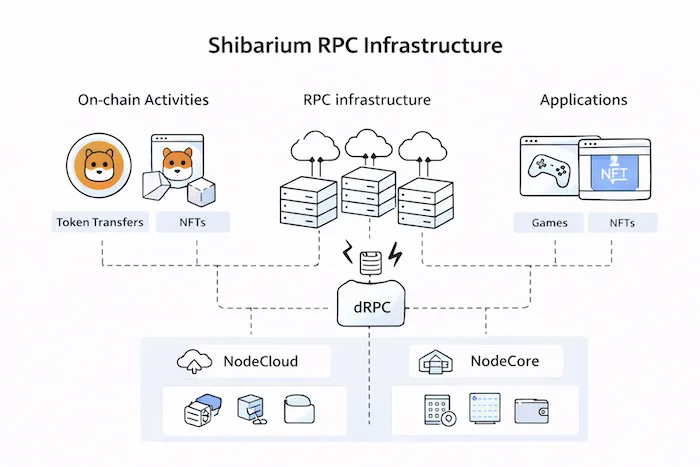
Shibarium RPC infrastructure refers to the remote procedure call layer that connects applications, wallets, and backend systems to the Shibarium blockchain.
Every interaction with the chain relies on RPC requests, including:
Submitting transactions
Fetching wallet balances
Reading smart contract state
Loading NFT metadata
Indexing events
On consumer oriented networks like Shibarium, these requests happen at very high frequency and often from unpredictable geographic locations.
Reliable Shibarium RPC infrastructure ensures that applications remain responsive even during traffic spikes, token launches, NFT mints, or community events.
What Makes Shibarium Different From Other Layer 2 Networks?
Many Layer 2 networks position themselves as generalized scaling solutions for Ethereum. Shibarium takes a more focused approach.
Community Scale First
Shibarium is designed around one of the largest and most active crypto communities in the world. That changes how infrastructure must behave. Instead of predictable DeFi traffic from a small number of contracts, Shibarium applications often experience:
Bursty traffic patterns
Large numbers of wallet level requests
Frontend heavy usage from user devices
This makes Shibarium RPC infrastructure far more sensitive to latency and reliability issues.
Consumer Application Focus
Shibarium applications are commonly consumer facing. Games, NFT platforms, social tools, and payment utilities dominate early usage. These applications require:
Fast read performance
Low variance in response times
Consistent availability across regions
A slow RPC response on a consumer application directly impacts retention.
Why Shibarium RPC Infrastructure Matters More Than Most Chains?
On many experimental networks, an RPC outage is an inconvenience. On Shibarium, it is a user facing failure.
Consumer applications depend on RPC access for nearly every UI interaction. When RPC infrastructure degrades, users experience:
Wallet balances not loading
Transactions stuck or delayed
NFTs failing to render
Applications appearing broken
This is why production grade Shibarium RPC infrastructure must be treated as core architecture, not tooling.
Building on Shibarium as a Developer
From a development perspective, Shibarium feels familiar to Ethereum builders. It supports EVM compatible smart contracts and common tooling.
Typical workflows include:
Deploying contracts for tokens and NFTs
Integrating wallets for end users
Running backend services that submit transactions
Indexing events for application state
All of these workflows depend on consistent RPC performance.
Applications that rely on public RPC endpoints often struggle as usage grows. Rate limits, shared capacity, and unpredictable latency become bottlenecks.
Public RPC Endpoints vs Dedicated Shibarium RPC Infrastructure
Public RPC endpoints are useful for early experimentation but are not designed for production traffic.
Common limitations include:
Shared bandwidth with unknown workloads
Aggressive rate limiting
No performance guarantees
Single region deployments
As Shibarium applications scale, these limitations surface quickly.
Dedicated Shibarium RPC infrastructure solves these issues by offering controlled capacity, predictable performance, and better global coverage.
Using dRPC for Shibarium RPC Infrastructure
To support developers building on Shibarium, dRPC provides professionally managed RPC access designed for real world workloads.
dRPC’s Shibarium RPC infrastructure offers:
Distributed provider architecture
Intelligent request routing
Global endpoint availability
High uptime and redundancy
Instead of relying on a single RPC node, traffic is routed across independent providers to reduce the impact of outages and congestion.
Developers can access Shibarium RPC endpoints directly via dRPC’s chainlist page:
https://drpc.org/chainlist/shibarium-mainnet-rpc
This setup aligns well with Shibarium’s consumer scale requirements.
Shibarium RPC Infrastructure and Application Architecture
Different parts of an application generate different traffic patterns.
Frontend clients generate unpredictable global traffic
Backend services often operate from fixed regions
Indexers and analytics tools generate sustained load
Shibarium RPC infrastructure must handle all of these simultaneously. dRPC allows developers to route traffic efficiently without building custom infrastructure themselves.
For teams managing multi chain deployments, dRPC also provides unified access across networks through its chainlist covering endpoints for over 186 blockchains:
When to Use NodeCloud vs NodeCore on Shibarium?
Choosing between NodeCloud and NodeCore is not about company size. It is about traffic patterns and infrastructure design.
NodeCloud for Shibarium Applications
NodeCloud is best suited for applications that:
Serve requests from user devices globally
Experience unpredictable traffic spikes
Require low latency across regions
Want minimal operational overhead
This makes NodeCloud ideal for most Shibarium consumer applications.
Learn more about NodeCloud here:
https://drpc.org/nodecloud-multichain-rpc-management
NodeCore for Controlled Backend Traffic
NodeCore is better suited for:
Backend only workloads
Traffic originating from one or two regions
Teams that want full infrastructure control
Use cases with predictable request patterns
In practice, many teams use NodeCore for backend services and NodeCloud for frontend traffic.
Shibarium Compared to Payments Focused Chains
Shibarium is often contrasted with infrastructure focused Layer 1 networks designed for payments. A useful comparison is Tempo L1, which targets stablecoin settlement and institutional finance.
While Tempo optimizes for deterministic execution and compliance, Shibarium optimizes for consumer scale and community usage. Both highlight how infrastructure requirements differ based on application focus.
A deeper look at Tempo’s infrastructure design is available here:
https://drpc.org/blog/tempo-l1-rpc-infrastructure/
Use Cases Emerging on Shibarium
Developers building on Shibarium are focusing on applications that benefit from low fees and high throughput.
Common use cases include:
Blockchain games with frequent state updates
NFT marketplaces serving large communities
Token gated social platforms
Community driven payment tools
All of these rely on dependable Shibarium RPC infrastructure to function correctly.
The Future of Shibarium RPC Infrastructure
As Shibarium adoption grows, infrastructure expectations will continue to rise.
Successful applications will be those that:
Treat RPC as production infrastructure
Design for global traffic from day one
Avoid reliance on fragile public endpoints
Monitor latency and uptime continuously
Shibarium’s long term success depends on infrastructure that can support its community scale without degradation.
Take-Away
Shibarium is not simply another Ethereum scaling solution. It is a network designed to support consumer scale blockchain applications built around one of the largest communities in crypto.
For developers, success on Shibarium depends heavily on infrastructure choices. Shibarium RPC infrastructure is not optional. It is foundational.
With dRPC’s distributed Shibarium RPC endpoints and flexible infrastructure options through NodeCloud and NodeCore, builders can focus on delivering applications that remain fast, reliable, and resilient under real world usage.
FAQs
What is Shibarium RPC infrastructure?
Shibarium RPC infrastructure is the communication layer that allows applications and wallets to interact with the Shibarium blockchain. It handles transaction submission, state queries, and contract interactions.
Why is RPC reliability important on Shibarium?
Shibarium supports consumer applications with unpredictable traffic. Unreliable RPC infrastructure causes slow responses, failed transactions, and broken user experiences.
Should I use public RPC endpoints for Shibarium?
Public RPC endpoints are suitable for testing but not for production. They often introduce rate limits, shared capacity, and inconsistent latency.
What is the best RPC provider for Shibarium?
Developers building production applications typically use dedicated providers like dRPC, which offer distributed, low latency Shibarium RPC infrastructure.
When should I choose NodeCloud vs NodeCore?
Choose NodeCloud for global frontend traffic and unpredictable usage. Choose NodeCore for backend only workloads with predictable regional traffic.